

What is Cellular Senescence? Explaining "Zombie Cells" and Their Role in Skin Aging
Quick answer
The anti-aging market is projected for significant growth, driven by consumer demand for innovative solutions, including those with anti-senescence properties. A Grand View Research report indicates this trajectory. Understanding the mechanisms of cellular aging, such as cellular senescence in skin, is crucial for developing these next-generation ingredients. This article will explore the role of "zombie cells" in skin aging and the emerging strategies to mitigate their impact.
Key Takeaways
Cellular senescence in skin contributes significantly to visible aging.
The SASP (Senescence-Associated Secretory Phenotype) drives inflammation and collagen breakdown.
Senolytics selectively eliminate senescent cells; senomorphics mitigate SASP.
Botanical extracts offer promising avenues for anti-senescence ingredients.
Regulatory clarity for "senolytic" claims in cosmetics remains a key consideration.
The Role of Cellular Senescence in Skin Aging
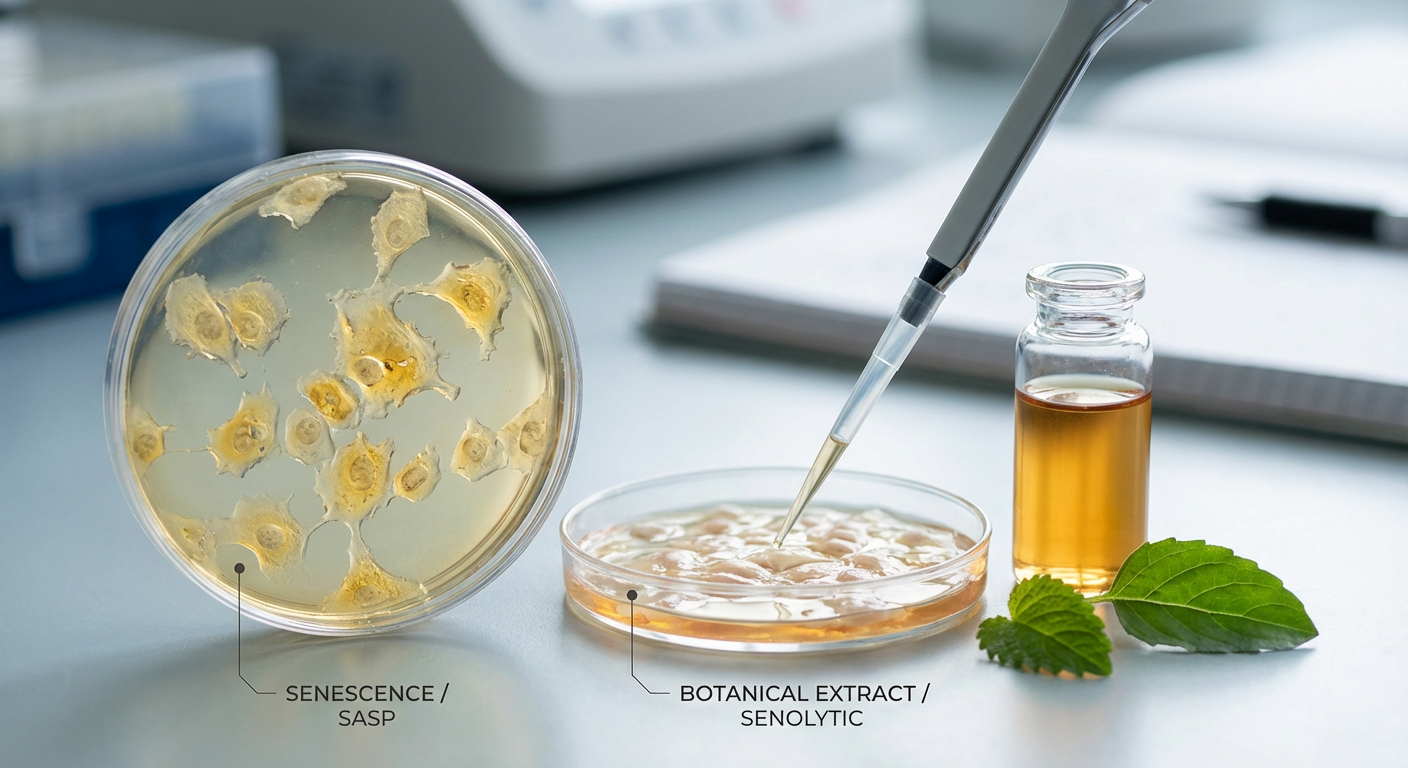
Cellular senescence in skin involves dysfunctional cells, often termed "zombie cells," that cease to divide but remain metabolically active, contributing significantly to the aging phenotype. These cells accumulate in aged and photodamaged tissue, as correlated by a 2018 review in PMC. Their persistent presence impacts tissue function and homeostasis. This accumulation is not merely a marker of aging; it actively drives the process. The deleterious effects are primarily mediated through secreted factors. Targeting these cells offers a novel approach to anti-aging interventions.
Impact of Senescent Cells on Skin Health
Senescent cells actively contribute to various aspects of skin aging. Their presence disrupts normal physiological processes.
Reduced regenerative capacity: Senescent cells inhibit the proliferation of surrounding healthy cells.
Fibroblast dysfunction: They impair collagen and elastin synthesis, leading to loss of firmness.
Melanocyte dysregulation: Can contribute to age spots and uneven pigmentation.
Chronic inflammation: Through the secretion of pro-inflammatory cytokines.
Impaired wound healing: Slows down the skin's natural repair mechanisms.
Understanding the Senescence-Associated Secretory Phenotype (SASP)
The Senescence-Associated Secretory Phenotype (SASP) is a complex collection of molecules secreted by senescent cells, significantly influencing the tissue microenvironment. This includes pro-inflammatory cytokines, chemokines, proteases, and growth factors that collectively perpetuate cellular damage. The 2022 research on SASP impact highlighted its role in chronic inflammation and extracellular matrix degradation. The SASP can also induce senescence in neighboring healthy cells, creating a detrimental feedback loop that accelerates skin aging. Understanding its components is critical for developing targeted anti-aging strategies.
SASP Components and Their Effects
The diverse composition of SASP contributes to a spectrum of age-related skin pathologies. Each component plays a specific role in disrupting homeostasis.
The SASP is characterized by a multimodal molecular signature that propagates dysfunction.
SASP Component Category | Key Examples | Effect on Skin |
|---|---|---|
Pro-inflammatory Cytokines | IL-6, IL-8, TNF-α | Chronic low-grade inflammation, impaired barrier function |
Chemokines | CXCL1, CCL2 | Recruitment of immune cells, exacerbating inflammation |
Matrix Metalloproteinases (MMPs) | MMP-1, MMP-3, MMP-9 | Degradation of collagen and elastin, leading to wrinkles and laxity |
Growth Factors | VEGF, HGF | Can promote angiogenesis and alter tissue remodeling |
How does the SASP contribute to specific skin aging phenotypes (e.g., hyperpigmentation, collagen loss)?
The SASP contributes to hyperpigmentation by inducing inflammation, which can stimulate melanogenesis irregularly, leading to age spots and uneven skin tone. For collagen loss, the release of matrix metalloproteinases (MMPs) directly degrades the extracellular matrix components, including collagen and elastin, resulting in reduced skin elasticity, firmness, and increased wrinkles. A 2020 review on senescence propagation further supports this, noting the SASP's capacity to induce senescence in neighboring healthy cells.
Senolytics and Senomorphics: Targeting Zombie Cells in Skin Care
Addressing the burden of senescent cells requires distinct strategies: senolytics and senomorphics. Senolytics are compounds that selectively induce apoptosis in senescent cells, effectively removing them from tissues. This targeted elimination reduces the overall senescent cell load and its associated detrimental effects. Senomorphics, conversely, modulate or suppress the SASP without necessarily killing the senescent cells themselves. This approach aims to neutralize the pro-inflammatory and matrix-degrading activities of "zombie cells," mitigating their impact on the surrounding tissue. Both strategies hold promise for anti-aging interventions.
Mechanisms of Action
The efficacy of senolytic and senomorphic agents hinges on their specific engagement with cellular pathways. These mechanisms dictate their therapeutic potential in skin.
Senolytics: Often target anti-apoptotic pathways dysregulated in senescent cells, such as BCL-2/BCL-xL, leading to their programmed cell death. Quercetin, for instance, selectively induces apoptosis.
Senomorphics: Inhibit key SASP components, including NF-κB signaling, JAK/STAT pathways, and mTOR, thereby reducing the secretion of pro-inflammatory factors and MMPs.
Modulating stress responses: Some compounds may restore cellular proteostasis or enhance autophagy in senescent cells, altering their secretory profile.
What are the differences in efficacy between senolytics and senomorphics for skin health?
Senolytics offer direct clearance of senescent cells, leading to a reduction in the source of SASP, which can result in more profound and potentially longer-lasting improvements in skin health by restoring tissue homeostasis. Senomorphics focus on neutralizing the detrimental effects of the SASP, primarily reducing inflammation and matrix degradation without eliminating the senescent cells. Both approaches aim to improve skin health; however, senolytics target the root cause, while senomorphics manage the symptoms.
Key Anti-Senescence Ingredients and Their Mechanisms
Several compounds have emerged as promising contenders for anti-senescence applications in skin care, primarily due to their senolytic or senomorphic properties. These ingredients often exhibit pleiotropic effects, including antioxidant and anti-inflammatory activities. Preclinical studies are providing evidence for their efficacy.
Botanical Compounds with Anti-Senescence Activity
Natural extracts are being rigorously evaluated for their potential to combat cellular senescence. Many of these compounds are flavonoids or polyphenols.
Botanical compounds are gaining attention for their multi-targeted effects against aging.
Quercetin: A flavonoid found in many fruits and vegetables, quercetin acts as a senolytic by selectively inducing apoptosis in senescent cells. A 2020 study highlights its senolytic effects.
Fisetin: Another flavonoid, found in strawberries and apples, fisetin has demonstrated significant senolytic activity across various cell types. Its potential is explored in a book chapter on senolytic agents.
Ursolic Acid: Found in plants like Ocimum sanctum (Holy Basil), ursolic acid exhibits anti-inflammatory and antioxidant properties, which can indirectly modulate the SASP. For formulators evaluating complementary bioactives, adaptogens in anti aging skincare offer valuable insights.
Rosmarinic Acid: Present in Melissa officinalis (Lemon Balm) and Ocimum sanctum (Holy Basil), rosmarinic acid has strong antioxidant and anti-inflammatory effects. It can help suppress components of the SASP. Its role in SIRT1 activation skincare is also significant.
What are the most promising botanical senolytic compounds for skin applications?
The most promising botanical senolytic compounds for skin applications include quercetin and fisetin, both flavonoids with demonstrated selective senolytic activity in preclinical models. Other compounds with potent anti-inflammatory and antioxidant properties, such as ursolic acid and rosmarinic acid, may act as senomorphics by mitigating the SASP, though their direct senolytic efficacy requires further dedicated study.
Are there specific extraction methods that enhance the senolytic potential of botanicals?
Targeted extraction methods like supercritical CO2 extraction, enzyme-assisted extraction, or subcritical water extraction can enhance the yield and purity of specific senolytic compounds (e.g., flavonoids, polyphenols) from botanicals. Optimizing solvent polarity, temperature, and pressure can significantly impact the concentrate's senolytic or senomorphic potential, necessitating careful analytical validation.
The Emerging Market for Senolytics Skincare
The concept of "senolytics skincare" is rapidly gaining traction within the anti-aging market, driven by increasing consumer awareness of cellular-level aging mechanisms. Formulators are actively seeking novel ingredients that offer scientifically substantiated age-reversal or age-delaying benefits. This represents a significant shift from traditional anti-aging approaches. The global anti-aging market is projected for substantial growth, underscoring the demand for innovative solutions. Ingredients that can demonstrate efficacy in targeting cellular senescence are poised to capture a significant share of this evolving market.
Market Drivers and Opportunities
Several factors are fueling the expansion of the senolytics skincare segment. These drivers create fertile ground for new product development.
Increased scientific understanding: Growing research into the role of senescence in aging provides a robust scientific basis for new products. A review on senolytics as an anti-aging approach highlights this.
Consumer demand for advanced solutions: Educated consumers seek products that go beyond cosmetic effects, targeting underlying biological processes.
Natural and botanical focus: A preference for naturally derived ingredients aligns with botanical senolytics and senomorphics.
Personalized and precision aging: The ability to target specific cellular pathways supports personalized skincare trends.
What are the anticipated market trends for anti-aging ingredients targeting cellular senescence?
Anticipated market trends for anti-aging ingredients targeting cellular senescence include a rise in demand for botanical-derived senolytics and senomorphics, increased emphasis on scientific validation and transparency of claims, and the development of combination therapies leveraging multiple anti-senescence mechanisms. The market will also see a focus on novel delivery systems for these actives and greater integration with healthy aging and wellness concepts.
Regulatory Pathways and Safety Considerations for Anti-Senescence Actives
The regulatory landscape for anti-senescence actives, especially those making claims related to cellular modification, presents a nuanced challenge for formulators. While cosmetic products generally do not require pre-market approval, claims that imply drug-like action can trigger stricter oversight. This distinction is crucial for product positioning and compliance. Safety and efficacy substantiation remain paramount. Comprehensive data, including toxicology and efficacy studies, are essential for bringing these innovative ingredients to market responsibly.
Cosmetic vs. Drug Classification
The classification of an anti-senescence ingredient hinges on its intended use and claims. This determines the regulatory pathway.
Cosmetic: Defined as articles intended to be applied to the human body for cleansing, beautifying, promoting attractiveness, or altering appearance. FDA guidance on cosmetic regulations states they do not require pre-market approval.
Drug: Defined as articles intended for use in the diagnosis, cure, mitigation, treatment, or prevention of disease; or articles (other than food) intended to affect the structure or any function of the body. Explicit claims to "remove senescent cells" could lead to drug classification.
What are the regulatory challenges for incorporating senolytics into cosmetic formulations?
The primary regulatory challenge for incorporating senolytics into cosmetic formulations is navigating the cosmetic-drug boundary. Claims of "removing senescent cells" or "curing aging" could classify a product as a drug, requiring extensive clinical trials and regulatory approval. Formulators must ensure claims align strictly with cosmetic definitions (e.g., "improves appearance of aging skin by supporting cellular health") and adhere to ingredient safety assessments by bodies such as EFSA for novel foods or similar cosmetic authorities.
Can senolytic ingredients cause adverse reactions in the skin?
Preclinical studies suggest that some botanical senolytics like quercetin and fisetin have favorable safety profiles. However, human safety data for topical applications, especially long-term, is limited. Potential adverse reactions could include irritation, sensitization, or allergic responses, particularly with high concentrations or specific formulations. Robust clinical testing is necessary to confirm long-term safety and identify any potential contraindications.
What is the long-term efficacy of topical senolytics for anti-aging?
The long-term efficacy of topical senolytics for anti-aging remains an active area of research. While preclinical studies suggest promising short-term benefits in reducing senescent cell burden and improving skin parameters, comprehensive human clinical trials are needed to demonstrate sustained efficacy and safety over extended periods. The challenge lies in translating initial positive observations into demonstrable long-term anti-aging effects in diverse populations.
Botanical Innovation: Supernormal Greens' Approach to Anti-Senescence Ingredients
Supernormal Greens leverages proprietary vertical farming technology to cultivate botanical raw materials with precisely upregulated secondary metabolite profiles, ideal for anti-senescence applications. Our abiotic/biotic stress protocols, including UV-B and elicitor treatments, enhance key compounds like ursolic acid and rosmarinic acid, which function as potent senomorphics or supportive anti-aging agents. This approach ensures batch-to-batch consistency and heightened potency. For instance, our Ocimum sanctum (Holy Basil) contains significantly elevated ursolic acid (up to 18x vs field-grown) and rosmarinic acid, while our Melissa officinalis (Lemon Balm) achieves up to 30x rosmarinic acid compared to field-grown counterparts (independent analysis, CTAEX lab, 2025). Such targeted bio-optimization enables formulators to develop high-efficacy products.
Precision Upregulation of Anti-Senescence Compounds
Our controlled environment agriculture (CEA) methodology allows for the precise modulation of plant biochemistry. This targeted approach yields ingredients with superior performance.
Xenohormesis Induction: Applying specific stressors triggers the plant's natural defense mechanisms, leading to increased production of secondary metabolites relevant to anti-senescence.
High-Value Actives: Focus on compounds like ursolic acid, rosmarinic acid, and other polyphenols known for their antioxidant, anti-inflammatory, and potential senomorphic properties. Our ursolic acid collagen synthesis capabilities exemplify this.
Batch-to-Batch Consistency: Controlled conditions eliminate environmental variability, ensuring consistent active ingredient profiles without seasonal fluctuations, crucial for formulators aiming for reliable product performance.
How can Supernormal Greens differentiate its anti-senescence botanical offerings in the market?
Supernormal Greens differentiates its anti-senescence botanical offerings through exceptionally high and consistent concentrations of key bioactives like rosmarinic acid and ursolic acid, enabled by proprietary abiotic/biotic stress protocols in a vertical farm. This delivers 3–30x potency versus field-grown alternatives, along with pharma-grade microbial cleanliness and full European traceability. Our LCA data (0.72 kg CO₂-eq/kg, Martin, 2023) and 100% EUDR compliance by design further strengthen our unique value proposition.
Our commitment to sustainability further distinguishes our offering. Our LCA results of 0.72 kg CO₂-eq/kg underscore our environmental leadership.
Frequently Asked Questions
What are the most promising botanical senolytic compounds for skin applications?
The most promising botanical senolytic compounds for skin applications currently include flavonoids like quercetin and fisetin, exhibiting selective senolytic activity in preclinical models. Additionally, compounds like ursolic acid and rosmarinic acid act as potent senomorphics, mitigating the SASP through their anti-inflammatory and antioxidant properties.
How can we technically validate the senolytic activity of a botanical extract?
Technical validation of a botanical extract's senolytic activity involves in vitro assays using senescent cell models (e.g., fibroblast or keratinocyte cultures), quantifying senescent markers such as p16, p21, and SA-β-galactosidase activity. Additionally, measuring a reduction in SASP components (e.g., IL-6, IL-8, MMPs) and conducting selective cell death assays are crucial. Ex vivo organotypic skin models can further bridge the gap to in vivo relevance.
What are the regulatory challenges for incorporating senolytics into cosmetic formulations?
Regulatory challenges primarily revolve around avoiding drug claims; explicitly stating "removal of senescent cells" might classify the product as a drug. Ensuring claims focus on ameliorating skin aging signs, combined with robust safety data and compliance with cosmetic regulations like the EU Cosmetics Regulation, is essential.
Can senolytic ingredients cause adverse reactions in the skin?
While preclinical data for some natural senolytics suggest relative safety, human topical safety data, especially long-term, is limited. Potential adverse reactions might include localized irritation, allergic contact dermatitis, or photosensitivity, particularly with higher concentrations or specific chemical structures. Thorough dermal patch testing and clinical safety trials are indispensable for new formulations.
What is the long-term efficacy of topical senolytics for anti-aging?
Long-term efficacy data for topical senolytics in humans are still emerging. Preclinical studies indicate promise in improving skin parameters by reducing senescent cell burden. However, robust, randomized controlled clinical trials over extended periods are required to conclusively establish sustained anti-aging benefits and optimal usage protocols for human skin.
How does the SASP contribute to specific skin aging phenotypes (e.g., hyperpigmentation, collagen loss)?
The SASP contributes to hyperpigmentation by inducing chronic inflammation, which can stimulate melanocyte activity and irregular melanin production. For collagen loss, SASP's matrix metalloproteinases (MMPs) directly break down collagen and elastin fibers, leading to reduced skin firmness, elasticity, and increased wrinkle formation.
Are there specific extraction methods that enhance the senolytic potential of botanicals?
Yes, specific extraction methods can significantly enhance the senolytic potential of botanicals. Techniques such as supercritical fluid extraction, enzyme-assisted extraction, and targeted solvent fractionation can concentrate specific bioactive compounds (e.g., flavonoids, polyphenols) known for senolytic or senomorphic activity, thereby optimizing the extract's efficacy.
What are the differences in efficacy between senolytics and senomorphics for skin health?
Senolytics aim to directly eliminate senescent cells, thereby removing the source of the SASP and potentially leading to more comprehensive tissue rejuvenation. Senomorphics focus on mitigating the detrimental effects of the SASP without necessarily killing the senescent cells, primarily by reducing inflammation and matrix degradation. Both offer anti-aging benefits, but through distinct mechanisms.
How can Supernormal Greens differentiate its anti-senescence botanical offerings in the market?
Supernormal Greens can differentiate its anti-senescence botanical offerings through its proprietary vertical farming technology that yields extracts with significantly upregulated levels (3–30x) of key senomorphic compounds like rosmarinic and ursolic acids. This ensures batch-to-batch consistency, pharma-grade cleanliness, full European traceability, and superior efficacy compared to field-grown alternatives, supported by independent lab data (CTAEX, 2025).
What are the anticipated market trends for anti-aging ingredients targeting cellular senescence?
Anticipated market trends include a growing demand for scientifically validated, natural-origin senolytics and senomorphics. There will be an increased focus on ingredient transparency, ethical sourcing, and sustainability (e.g., EUDR compliance). Formulators will also seek multi-functional ingredients that offer broad anti-aging benefits beyond just senescence targeting.
The evolving understanding of cellular senescence highlights a critical pathway in mitigating skin aging. By providing meticulously cultivated, high-potency botanical extracts, Supernormal Greens enables formulators to develop next-generation anti-aging ingredients. Our commitment to efficacy, consistency, and sustainability positions us as a partner in this innovative market segment.
Contact Supernormal Greens to request samples and specifications.
References
Grand View Research. Anti-Aging Market Size, Share & Trends Analysis Report. https://www.grandviewresearch.com/industry-analysis/anti-aging-market
Cellular Senescence in Skin Aging: A Mini-Review. https://pmc.ncbi.nlm.nih.gov/articles/PMC6036166/
The Impact of Cellular Senescence on Skin Aging and Rejuvenation. https://pmc.ncbi.nlm.nih.gov/articles/PMC8900084/
Senolytics and Senomorphics as Anti-Aging Interventions. https://pmc.ncbi.nlm.ih.gov/articles/PMC7401170/
Senolytics: A new classification of drugs that selectively induces apoptosis in senescent cells. https://onlinelibrary.wiley.com/doi/full/10.1111/acel.12845
Quercetin and Ageing: New Insight. https://pmc.ncbi.nlm.nih.gov/articles/PMC7602078/
Fisetin as a Senolytic Agent. https://link.springer.com/chapter/10.1007/978-3-030-90045-2_6
Senolytics: A Promising Approach to Prevent and Treat Skin Aging. https://pmc.ncbi.nlm.nih.gov/articles/PMC9346083/
FDA's Role in Cosmetic Regulation. https://www.fda.gov/cosmetics/cosmetics-laws-regulations/fdas-role-cosmetic-regulation
Novel food. https://www.efsa.europa.eu/en/topics/topic/novel-food