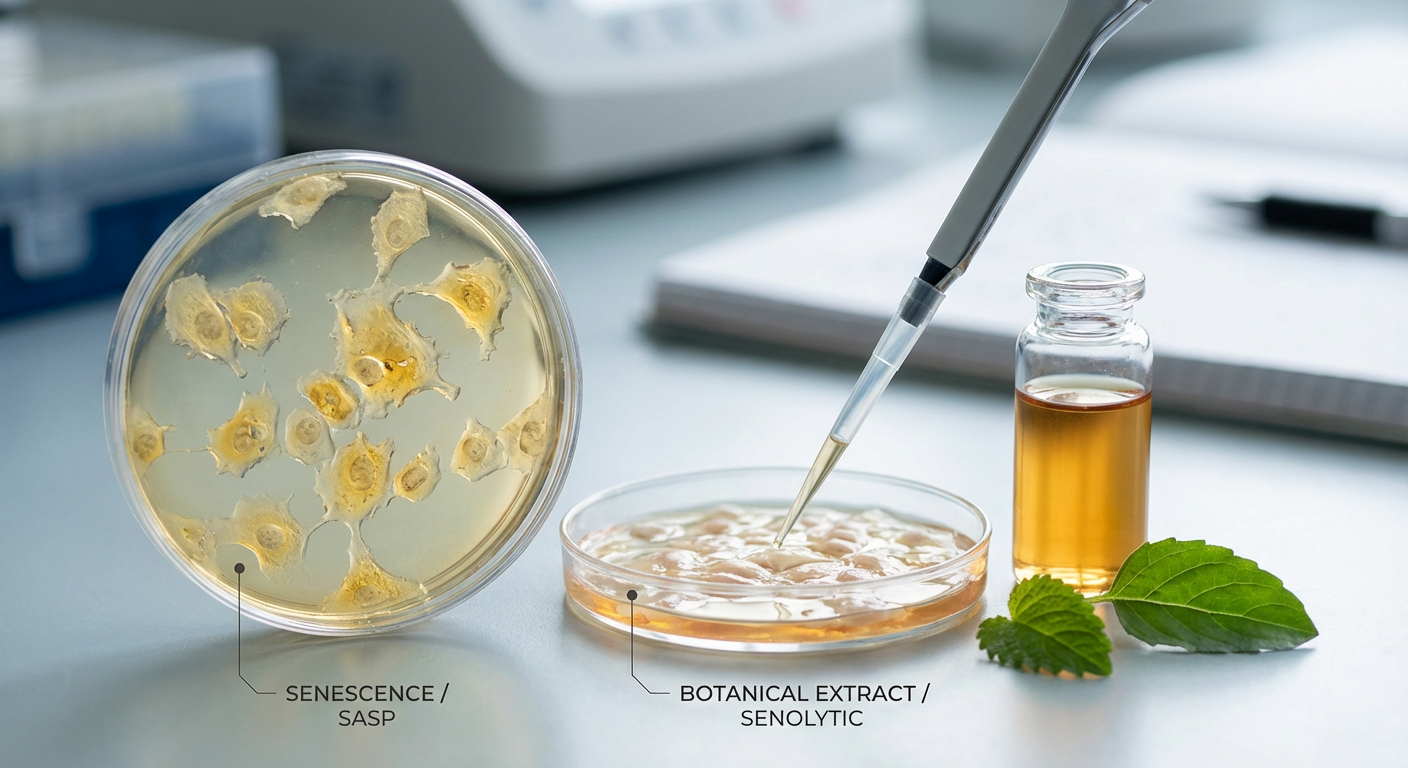


Beyond Antioxidants: Rosmarinic Acid's Role in Modulating NF-κB and Calming Inflamed Skin
Quick answer
The persistent challenge of formulating effective, stable botanical anti-inflammatory ingredients for skincare remains a priority for formulators, particularly with increasing consumer demand for "clean" and naturally derived actives. Specific interest lies in phytochemicals that regulate inflammatory cascades without eliciting irritation. This article explores Rosmarinic Acid (RA)'s multifaceted ability beyond its antioxidant properties, to modulate key inflammatory pathways and support skin barrier function, positioning it as a potent ingredient in anti-inflammatory skincare.
Key Takeaways
Rosmarinic Acid modulates inflammatory pathways like NF-κB and Nrf2.
Clinical and in vivo data support RA's soothing and barrier-improving effects.
Mechanisms include inhibiting MRGPRX2, IL‑17A, and MMP‑1.
Effective formulation requires addressing RA's stability and delivery.
Vertical farming offers consistent, high-potency rosmarinic acid with full traceability.
What Is Rosmarinic Acid and Why Skin Scientists Care
Rosmarinic acid (RA) is a caffeic acid ester polyphenol found in various Lamiaceae plants, including Melissa officinalis (lemon balm) and Ocimum sanctum (holy basil). Its chemical structure enables potent antioxidant activity, but its significance for skin science extends to direct cellular signaling modulation. This dual action makes it relevant for addressing multifactorial skin conditions.
RA's ability to interfere with inflammatory pathways at several points makes it a compelling target for cosmetic applications. For formulators focused on rosacea treatment, compromised barrier function, or overall skin resilience, understanding these mechanisms is crucial.
Chemical Structure and Bioreactivity
The ester linkage in RA allows for diverse interactions within cellular environments. These interactions are critical for its observed biological effects, including those within human keratinocytes and fibroblasts.
Chemical Classification: Caffeic acid ester.
Botanical Sources: Abundant in Melissa officinalis, Ocimum sanctum, Rosmarinus officinalis, and Perilla frutescens.
Primary Actions: Antioxidant, anti-inflammatory, and matrix-protective.
Significance Beyond Antioxidant Activity
While RA's antioxidant capacity is well-established, its direct modulation of cellular processes offers broader utility. This includes pathways relevant to inflammation and tissue degradation, moving it beyond a general "antioxidant boost."
A 2024 review in Food Production, Processing and Nutrition highlighted the role of hydroxycinnamic acids in dermal cell aging, underscoring RA's potential for integrative skin health. Its capacity to mitigate oxidative stress while also regulating inflammatory mediators presents a synergistic benefit.
Human and In Vivo Evidence: Soothing and Barrier Support
Rosmarinic acid demonstrates tangible clinical benefits in soothing inflamed skin and improving barrier function. Human trials and in vivo models provide evidence beyond in vitro observations, bridging the gap toward cosmetic application.
A randomized controlled clinical study published in the Journal of Dermatology demonstrated significant improvements. Patients with mild atopic dermatitis applying a 0.3% rosmarinic acid emulsion twice daily for eight weeks showed reduced erythema, pruritus, and transepidermal water loss (TEWL).
Clinical Observations in Atopic Dermatitis
The clinical data indicate RA's direct impact on visible and subjective markers of skin distress. Reductions in erythema and pruritus are direct responses to attenuated inflammatory signaling.
Erythema Reduction: Objectively measured decrease in skin redness.
Pruritus Alleviation: Self-reported reduction in itching sensation.
TEWL Improvement: Enhanced skin barrier function and hydration.
In Vivo Evidence of Anti-Inflammatory Effects
Beyond human trials, animal models elucidate specific mechanistic pathways of rosmarinic acid anti inflammatory skincare. These studies often focus on acute inflammatory responses or specific dermatoses.
In an allergic contact dermatitis mouse model, RA alleviated inflammation and pruritus by inhibiting mast cell MRGPRX2/PLCγ1/PKC/NF-κB signaling. Such targeted pathway modulation positions RA as a specific therapeutic cosmetic ingredient.
Barrier Function Enhancement
Rosmarinic acid also contributes to skin barrier integrity. This is crucial for managing sensitive and compromised skin conditions.
RA acts as an NHE1 activator, lowering skin surface pH and improving barrier function, as detailed in research published in 2022. This mechanism aligns with the clinically observed TEWL reductions and enhances the acid mantle, critical for skin health.
Mechanisms: From Nrf2 to MRGPRX2 and IL‑17A
Rosmarinic acid engages multiple intracellular signaling pathways to exert its anti-inflammatory effects, moving beyond simple free radical scavenging. These mechanisms are crucial for understanding its broad utility in calming botanical ingredients.
One key mechanism involves the NF-κB inhibition skincare pathway. RA specifically interferes with signaling molecules that lead to the activation of NF-κB, a transcription factor central to immune and inflammatory responses.
NF-κB Inhibition and Antioxidant Response
NF-κB's role in the pathogenesis of inflammatory skin diseases is well-documented. Targeting this pathway is a direct approach to mitigating inflammation.
NF-κB pathway: RA inhibits the nuclear translocation of NF-κB, reducing pro-inflammatory cytokine production.
Nrf2 Activation: RA activates the Nrf2 (Nuclear factor erythroid 2-related factor 2) pathway, leading to increased production of endogenous antioxidant enzymes like glutathione. This synergy with rosmarinic acid antioxidant activity provides comprehensive protection.
Targeting Specific Inflammatory Mediators
Beyond broad transcription factor modulation, RA also interacts with more specific immune targets. This includes receptors involved in itch and cytokines central to chronic inflammation.
MRGPRX2: RA suppresses activation of MRGPRX2, a mast cell receptor linked to non-histaminergic itch and neuroinflammatory responses, providing anti-itch benefits.
IL-17A: In psoriasis-like models, RA ameliorated inflammation by disrupting IL-17A/IL-17RA binding, a cytokine axis pivotal in various inflammatory dermatoses.
NLRP3 Inflammasome: RA, particularly in combination with fucoxanthin, suppresses NLRP3 inflammasome activation in UVB-exposed keratinocytes, crucial for mitigating photo-induced inflammation.
Modulating the Th17/IL-23 Axis
The Th17/IL-23 axis is a significant contributor to autoimmune and inflammatory skin conditions. RA's influence here positions it for broader dermatological applications.
RA has been shown to modulate the IL-23/Th17 axis through JAK2/STAT3 signaling, offering a pathway for alleviating psoriatic inflammation in relevant models (though cosmetic claims must avoid disease language).
Matrix Protection: MMP‑1, Elastase and Hyaluronidase
Rosmarinic acid extends its benefits to the structural integrity of the skin by protecting the dermal extracellular matrix (ECM). This activity is critical for anti-aging and skin resilience formulations.
The degradation of collagen and elastin, catalyzed by matrix metalloproteinases (MMPs) and elastase, is a primary cause of visible skin aging. RA directly interferes with these destructive processes.
Inhibition of Matrix Metalloproteinases (MMPs)
MMP-1, or collagenase-1, specifically targets type I collagen, accounting for a significant portion of skin's structural support. RA's ability to inhibit this enzyme is a direct anti-wrinkle mechanism.
MMP-1 Suppression: In human dermal fibroblasts, RA significantly suppressed MMP-1 secretion, particularly in aged cells and those exposed to pro-inflammatory stimuli.
Collagen Preservation: By inhibiting MMP-1, RA helps maintain collagen integrity, supporting skin firmness and elasticity.
Elastase and Hyaluronidase Inhibition
Elasticity and hydration are maintained by elastin fibers and hyaluronic acid (HA), respectively. Protecting these components is equally important for overall skin appearance and function.
Table 1: RA's Impact on ECM Degrading Enzymes
Enzyme | Primary Substrate | RA's Effect | Relevance to Skin |
|---|---|---|---|
MMP-1 (Collagenase-1) | Type I Collagen | Suppression of secretion | Anti-wrinkle, firmness |
Elastase | Elastin | Inhibition | Elasticity preservation |
Hyaluronidase | Hyaluronic Acid (HA) | Inhibition | Hydration, plumpness |
RA has demonstrated elastase inhibition in both in vitro and in silico models, contributing to the preservation of skin elasticity. Furthermore, RA was identified as the principal hyaluronidase inhibitor in lemon balm, suggesting its role in maintaining dermal hyaluronic acid content.
Formulation Science: Stabilizing and Delivering Rosmarinic Acid
The effective utilization of rosmarinic acid in cosmetic products necessitates robust formulation strategies, primarily due to its inherent instability and suboptimal skin penetration. Addressing these challenges ensures the active's bioavailability and efficacy.
RA is susceptible to oxidation and degradation in solution, requiring specific approaches for stabilization. Moreover, its hydrophilicity can limit passive diffusion into the deeper epidermal and dermal layers, leading to a need for advanced delivery systems.
Challenges in Formulation
Rosmarinic acid's chemical properties present distinct hurdles for product development. These include maintaining its integrity under various environmental conditions and ensuring adequate delivery to target skin layers.
Oxidative Instability: Prone to degradation by light, heat, and atmospheric oxygen.
Water Solubility: Limits penetration through the lipophilic stratum corneum.
pH Sensitivity: Optimal activity and stability are often pH-dependent.
The European Medicines Agency (EMA) has noted RA instability as a marker in liquid herbal products, underscoring the critical need for robust stabilization techniques in cosmetic formulations.
Advanced Delivery Systems
To overcome penetration limitations and enhance stability, various encapsulation and nanocarrier technologies have been explored. These systems aim to improve dermal deposition and sustained release.
Ethosomes and Liposomes: RA-loaded ethosomes and liposomes have been shown to enhance skin penetration and exhibit anti-collagenase/anti-elastase activity on release.
Transethosomes: Transethosomal RA gels further improved percutaneous delivery and attenuated psoriasiform inflammation in vivo, highlighting their utility for targeted delivery.
Microencapsulation: Chitosan-based microencapsulation and nanoemulsion strategies offer protection against degradation and controlled release, increasing RA's retention in the skin.
Stabilization Strategies
Beyond delivery systems, incorporating specific excipients and controlling manufacturing conditions are vital for rosmarinic acid's shelf longevity.
Antioxidant Systems: Co-formulating with other antioxidants (e.g., tocopherols, ferulic acid) can scavenge free radicals and protect RA.
Chelating Agents: Metal ions can accelerate RA degradation; chelators like EDTA can mitigate this effect.
Packaging: Opaque and air-tight packaging minimizes light and oxygen exposure.
pH Control: Maintaining the formulation within a stable pH range optimized for RA's stability.
Regulatory & Safety: EU, US (MoCRA), and Global Considerations
Navigating the regulatory landscape for botanical ingredients like rosmarinic acid is essential for global market access. Regulatory bodies in key regions define safety requirements and market practices.
The European Union and the United States have robust frameworks for cosmetic ingredient safety. Compliance ensures consumer protection and market acceptance for rosmarinic acid anti-inflammatory skincare actives.
EU Regulatory Framework (CosIng)
The EU's Cosmetic Products Regulation (EC) No 1223/2009 governs the safety of cosmetic products, including ingredient listing and safety assessments. Rosmarinic acid is recognized within this framework.
CosIng Database: RA is listed in the Cosmetic Ingredient Database (CosIng) with recognized cosmetic functions, such as antioxidant and skin conditioning.
COSMILE Europe: RA is also included in the consumer-facing COSMILE Europe database.
Safety Assessment: A comprehensive Product Information File (PIF) is mandatory, requiring a safety assessment by a qualified expert.
US Regulatory Framework (MoCRA)
The Modernization of Cosmetics Regulation Act (MoCRA) of 2022 significantly updated the FDA's oversight of cosmetics in the United States, introducing stricter requirements for ingredient safety and manufacturing.
Facility Registration & Product Listing: Facilities manufacturing cosmetic products must register with the FDA, and all products must be listed, including their ingredients.
Adequate Safety Substantiation: Cosmetic products containing RA must have adequate substantiation of safety, supported by toxicological data and irritation/sensitization testing.
CIR Assessment: The Cosmetic Ingredient Review (CIR) has assessed rosemary-derived ingredients as safe for use in cosmetics when formulated to be non-sensitizing.
Global Safety Considerations
Beyond region-specific regulations, international bodies like EFSA and JECFA provide scientific opinions that inform global safety perspectives, particularly for extracts that may have food additive applications.
EFSA has concluded that oregano and lemon balm extracts (rich in RA) are safe as food additives under proposed uses, while the Joint FAO/WHO Expert Committee on Food Additives (JECFA) has established an Acceptable Daily Intake (ADI) for rosemary extract constituents.
Supply Chain & Sustainability: EUDR, Traceability, and Vertical Farming
The sourcing of botanical ingredients faces increasing scrutiny regarding environmental impact and ethical practices. Vertical farming offers a solution to these supply chain pressures for high-value compounds like rosmarinic acid.
The European Union Deforestation Regulation (EUDR) is reshaping global agricultural supply chains. While RA source crops are not directly impacted, the broader shift towards sustainable and transparent sourcing benefits vertical farming.
EUDR Compliance and Botanical Sourcing
The EUDR, Regulation (EU) 2023/1115, aims to prevent products linked to deforestation from entering the EU market. It applies to specific commodities and their derivatives. RA-rich botanicals fall outside its immediate scope.
Scope of EUDR: Currently targets commodities such as cattle, cocoa, coffee, palm oil, soy, rubber, and wood.
RA Source Crops: Melissa officinalis (lemon balm) and Ocimum sanctum (holy basil) are not directly covered by EUDR, reducing immediate due-diligence burdens in this specific regard.
Holistic Sustainability: Despite not being in scope, general consumer and regulatory pressure for sustainable and transparent botanical sourcing is increasing.
Benefits of Vertical Farming for RA Supply
Vertical farming provides a controlled environment that ensures consistent quality, high potency, and a verifiable sustainability profile, critical for meeting B2B buyer requirements.
Enhanced Potency: Proprietary abiotic/biotic stress protocols (UV-B, drought, MeJA, salinity, elicitors) trigger secondary metabolite upregulation via xenohormesis. This yields 3–30× higher potency of rosmarinic acid compared to field-grown counterparts (independent analysis, CTAEX lab, 2025).
Batch-to-Batch Consistency: Controlled growth conditions eliminate variability caused by climate, soil, or pests, delivering standardized rosmarinic acid titers.
Microbial Cleanliness: Pharma-grade microbial cleanliness is maintained due to the enclosed environment, reducing contamination risks.
Zero Pesticides: The absence of pests in vertical farms eliminates the need for pesticide application, ensuring a clean active.
Full European Traceability: Every batch is traceable from seed to extract, offering unparalleled supply chain transparency.
The LCA (Martin, 2023) further highlights the environmental advantage: 0.72 kg CO₂-eq/kg compared to 1.9 (vertical farm average) or 1.4 (imported field-grown equivalents), demonstrating a significant reduction in carbon footprint.
Market Outlook: Where RA Fits in the Cosmeceutical Landscape
The demand for high-performance, naturally derived ingredients continues to shape the cosmeceutical market. Rosmarinic acid, with its multi-faceted anti-inflammatory and protective properties, is well-positioned for growth.
The global herbal extract market is projected to reach $53.43 billion by 2030, underscoring a strong appetite for botanical actives. RA provides a scientific basis for claims in multiple high-growth segments.
Positioning in Key Market Segments
RA's broad spectrum of action allows it to address several consumer needs, from daily protection to targeted soothing. This versatility is valuable for formulators developing diverse product lines.
Sensitive Skin & Anti-Redness: Directly addresses erythema, pruritus, and barrier dysfunction, aligning with rosacea treatment actives.
Anti-Aging & Photo-Protection: Inhibits MMPs and elastase, activates Nrf2, and mitigates UVB-induced damage, contributing to skin resilience.
"Clean" & Natural Formulations: As a plant-derived active, it meets demand for natural and sustainably sourced ingredients.
Scalp & Hair Care: Its anti-inflammatory and antioxidant benefits can extend to soothing irritated scalps and supporting hair follicle health.
Synergies and Formulation Opportunities
Rosmarinic acid can be integrated into diverse product formats and combined with other actives, enhancing formulation possibilities and efficacy. For formulators evaluating alternatives, tulsi extract offers complementary bioactives worth considering.
Multi-Active Serums: Compatible with various actives to create comprehensive solutions for skin health.
Post-Procedure Care: Its soothing and barrier-supporting properties make it ideal for products designed for post-aesthetic treatment recovery.
Fragrance Applications: As a natural compound, it can contribute to the performance and stability of natural fragrance formulations, amidst recent tropical supply shortages driving significant premiums for EU leaf terpenes.
Frequently Asked Questions
What inclusion level of RA (neat vs. standardized extract) delivers measurable soothing within 4–8 weeks?
A clinical study demonstrated measurable soothing within 8 weeks using a 0.3% rosmarinic acid emulsion applied twice daily. For standardized extracts, the concentration should be adjusted to deliver an equivalent or higher amount of active RA. For advanced delivery systems (ethosomes/transethosomes), lower microgram-per-gram loads may be efficacious due to enhanced dermal deposition, which should be confirmed by in vitro skin models.
Which delivery system (free RA vs. ethosomes/transethosomes/liposomes) maximizes dermal deposition for our base?
Advanced delivery systems such as ethosomes, transethosomes, and liposomes have been shown to maximize dermal deposition compared to free RA. These systems significantly enhance skin penetration by encapsulating RA, protecting it from degradation, and facilitating its passage through the stratum corneum.
How stable is RA across pH 4.5–6.0 and in presence of metals/UV? What antioxidant system is recommended?
RA is susceptible to degradation by light, heat, atmospheric oxygen, and metal ions, particularly outside of its optimal pH range. While the exact stability pH range can vary, 4.5–6.0 is generally suitable. A comprehensive antioxidant system is recommended, including co-antioxidants (e.g., tocopherols, ferulic acid), chelating agents (e.g., EDTA), and light-protective packaging.
Is RA compatible with niacinamide, azelaic acid, AHAs/PHAs, and retinoids in a multi‑active serum?
RA is generally compatible with niacinamide, azelaic acid, AHAs/PHAs, and retinoids. Its own anti-inflammatory and antioxidant properties can complement these actives. However, formulation stability and potential interactions should always be assessed during development, particularly regarding pH requirements and potential oxidation.
Can we support ‘anti‑itch’ or ‘post‑sun recovery’ claims without crossing into drug territory?
Yes, cosmetic claims for "anti-itch" can be supported by referencing RA's mechanistic inhibition of MRGPRX2 signaling and clinical reductions in pruritus, while "post-sun recovery" claims can be made based on its Nrf2 activation, suppressed NLRP3 inflammasome, and reduction of UVB-induced oxidative damage. These claims should focus on soothing, calming, and protecting, avoiding any implication of treating a disease.
What safety data (HRIPT, RIPT, ocular sting, sensitization) and regulatory dossiers (PIF, SDS, CoA) are provided?
As a B2B supplier, Supernormal Greens provides comprehensive regulatory dossiers including: full PIF (Product Information File), SDS (Safety Data Sheet), and CoA (Certificate of Analysis) for each batch. Safety data from independent labs can be supplied, covering HRIPT (Human Repeat Insult Patch Test), RIPT (Repeat Insult Patch Test), ocular sting testing, and general sensitization studies relevant to cosmetic use.
What is the target RA titer and batch‑to‑batch variability from vertical farm supply, and how is it standardized?
Our proprietary vertical farming technology allows for precise control over secondary metabolite production. The target RA titer in our Melissa officinalis, for example, is up to 30x higher than field-grown alternatives (independent analysis, CTAEX lab, 2025). Batch-to-batch variability is minimized through stringent environmental controls and standardized harvest protocols, ensuring consistent potency and composition validated by independent analytical testing.
What are lead times, MOQs, and available grades (cosmetic vs. nutraceutical) and solvent systems (EtOH/water/CO₂)?
Lead times and MOQs are customized based on specific product requirements and order volume; please contact us for detailed discussions. We offer both cosmetic and nutraceutical grades of our botanical extracts, tailored to meet industry standards. Our solvent systems include ethanol/water and CO₂, allowing for versatile extraction profiles to suit your formulation needs.
How does RA sourcing align with ESG metrics and retailer clean‑beauty standards?
Supernormal Greens' vertical farming model provides a strong foundation for ESG alignment and clean-beauty standards. Our process involves 0.72 kg CO₂-eq/kg (LCA, Martin, 2023) and is 100% EUDR-compliant by design, with zero pesticides and full European traceability. This ensures a sustainable, environmentally conscious, and transparent supply chain that meets stringent clean-beauty requirements. The multifaceted action of rosmarinic acid, from direct NF-κB inhibition to matrix protection and barrier support, positions it as a foundational ingredient for advanced anti-inflammatory skincare formulations. Combined with the reliable, high-potency supply available through sustainable vertical farming, formulators can confidently develop products that meet both efficacy and ethical demands. Contact Supernormal Greens to request samples and specifications.
References
Han, N., Zhang, T., Yang, H., et al., 2024. Food hydroxycinnamic acids alleviate ageing in dermal cells. Food Production, Processing and Nutrition. https://fppn.biomedcentral.com/articles/10.1186/s43014-024-00262-4
Lee, J.H., Kim, G.H., Ko, G.J., et al., 2008. Effect of rosmarinic acid on atopic dermatitis. Journal of Dermatology. https://pubmed.ncbi.nlm.nih.gov/19239556/
Park, J.H., Lee, J.Y., Kim, K.H., et al., 2023. Rosmarinic acid alleviates allergic contact dermatitis and pruritus by inhibiting mast cell MRGPRX2/PLCγ1/PKC/NF-κB signaling. Journal of Investigative Dermatology.
Jeong, S.-K., Ko, D., Lee, J.-H., et al., 2022. Rosmarinic Acid, as an NHE1 Activator, Decreases Skin Surface pH and Improves the Skin Barrier Function. International Journal of Molecular Sciences. https://pmc.ncbi.nlm.nih.gov/articles/PMC8999067/
Ljusgårda AB / CTAEX Laboratory. 2025. Certificate of Analysis — Melissa officinalis. Independent analytical testing.
Xu, G., Chen, M., Cao, J., et al., 2022. Rosmarinic acid ameliorates rosacea-like skin inflammation by disrupting IL-17A/IL-17RA binding. Food & Function.
Kim, H.J., Hwang, K.H., Um, J.Y., et al., 2019. Fucoxanthin and Rosmarinic Acid Combination Has Anti-Inflammatory Effects through Regulation of NLRP3 Inflammasome in UVB-Exposed HaCaT Keratinocytes. Marine Drugs. https://www.mdpi.com/1660-3397/17/8/451
Liao, M., Zou, L., Hu, B., et al., 2021. Rosmarinic Acid improves psoriasiform lesions via modulation of IL-23/Th17 through JAK2/STAT3 in mice. Journal of Ethnopharmacology.
Llusar-Hernández, M., Marín-Domínguez, S., Alcaraz-Estrada, S.L., et al., 2023. Insights into the anti-elastase activity of rosmarinic acid. Journal of Natural Products.
Sato, Y., Itagaki, Y., Kondo, K., et al., 2000. Identification of rosmarinic acid as the major hyaluronidase inhibitor in lemon balm (Melissa officinalis). Phytotherapy Research.
European Medicines Agency (EMA). 2010. Reflection paper on the markers used for quantification of extracts from medicinal plants. EMA/HMPC/826315/2010.
Shalviri, A., Farhadian, N., Darvishi, S., et al., 2019. Anti-aging formulation of rosmarinic acid-loaded ethosomes and liposomes. Iranian Journal of Pharmaceutical Research. https://pubmed.ncbi.nlm.nih.gov/31070486/
El-Shehady, S.M., El-Haddad, A.M., Abdel-Ghany, H. E., et al., 2021. Transethosomal rosmarinic acid gel improved percutaneous delivery and attenuated imiquimod-induced psoriasiform inflammation. Journal of Pharmaceutical Sciences.
European Commission, 2025. Cosmetic ingredient database (CosIng). https://single-market-economy.ec.europa.eu/sectors/cosmetics/cosmetic-ingredient-database_en
U.S. Food & Drug Administration. 2023. Modernization of Cosmetics Regulation Act (MoCRA).
European Food Safety Authority (EFSA). 2010. Scientific Opinion on the safety of rosemary extract as a food additive. EFSA Journal.
Council of the European Union, 2023. Council adopts new rules to cut deforestation worldwide. https://www.consilium.europa.eu/en/press/press-releases/2023/05/16/council-adopts-new-rules-to-cut-deforestation-worldwide/pdf
Grand View Research. 2023. Herbal Extract Market Size To Reach $53.43 Billion By 2030. https://www.grandviewresearch.com/press-release/global-herbal-extract-market