

Mechanism of Action: How Rosmarinic Acid Neutralizes Oxidative Stress in Dermal Layers
Quick answer
The ongoing shift towards natural ingredients, coupled with increasing regulatory scrutiny on synthetic additives, presents a growing challenge for formulators seeking robust antioxidant solutions. Consumers and regulators alike are demanding transparent, efficacious, and sustainably sourced components for skin care and nutricosmetics. This demand underscores the critical need to thoroughly understand the precise mechanisms of action of natural compounds like rosmarinic acid. This article will delineate how rosmarinic acid (RA) exerts its antioxidant effects within dermal layers and beyond.
Key Takeaways
Rosmarinic acid directly scavenges multiple reactive oxygen species (ROS).
It activates Nrf2 signaling, bolstering endogenous antioxidant defenses in cells.
Clinical support details RA's safety and efficacy in human models.
Vertical farming offers consistent, high-potency RA with full traceability.
What is Rosmarinic Acid and Why It Matters for Oxidative Stability
Rosmarinic acid (RA) is a caffeic acid derivative belonging to the class of phenolic compounds, prominently found in Lamiaceae family plants such as Melissa officinalis (lemon balm) and Ocimum sanctum (holy basil). Its amphiphilic nature, with both hydrophilic and lipophilic characteristics, allows interaction with various cellular compartments and biological membranes. This structural versatility is crucial for its function as a broad-spectrum antioxidant. RA plays a significant role in protecting biological systems from oxidative damage, a primary driver of aging and various pathologies, including skin degradation. Oxidative stress in dermal layers is initiated by reactive oxygen species (ROS) generated from UV radiation, pollution, and intrinsic metabolic processes. These ROS can damage lipids, proteins, and DNA, leading to inflammation and impaired barrier function.
Key Characteristics of Rosmarinic Acid
Amphiphilic Structure: Enables broad cellular activity and membrane integration.
Phenolic Hydroxyl Groups: Essential for its free radical scavenging capacity.
Occurrence: Abundant in Lamiaceae species, including botanicals grown by Supernormal Greens like Melissa officinalis and Ocimum sanctum.
Biological Functions: Beyond antioxidant activity, it exhibits anti-inflammatory and antiviral properties.
Mechanisms: From Radical Scavenging to Nrf2 Signaling
Rosmarinic acid exerts its antioxidant activity through multiple, complementary mechanisms that provide comprehensive protection against oxidative stress. Its potency derives from direct free radical scavenging and the modulation of endogenous antioxidant pathways. A 2023 study in The Journal of Organic Chemistry confirmed RA's near diffusion-controlled scavenging of hydroxyl radicals in aqueous media. This chain-breaking capacity is critical for neutralizing highly reactive species before they inflict cellular damage. RA also activates the Nuclear factor erythroid 2-related factor 2 (Nrf2) signaling pathway, a master regulator of antioxidant and detoxification genes. Activation of Nrf2 leads to the increased synthesis of enzymes like heme oxygenase-1 (HO-1) and glutathione-S-transferase (GST), enhancing cellular defense capabilities.
Primary Antioxidant Mechanisms of Rosmarinic Acid
Rosmarinic acid employs both direct and indirect strategies to combat oxidative stress.
Direct Free Radical Scavenging: RA donates electrons or hydrogen atoms to stabilize reactive oxygen and nitrogen species, including hydroxyl radicals, superoxide anions, and peroxynitrite.
Chelation of Metal Ions: It can chelate transition metals such as iron and copper, preventing their involvement in Fenton-type reactions that generate highly damaging hydroxyl radicals. Research in the Journal of Agricultural and Food Chemistry demonstrated this in the context of LDL oxidation.
Nrf2 Pathway Activation: RA upregulates the expression of antioxidant enzymes by activating Nrf2, thereby bolstering cellular defenses against oxidative insults.
Inhibition of Oxidative Enzymes: Some evidence suggests RA can modulate or inhibit enzymes involved in ROS production, such as NADPH oxidases.
Pro-oxidant Considerations
While primarily an antioxidant, RA's redox behavior can exhibit context-dependent pro-oxidant properties under specific conditions. Studies have shown that in the presence of transition metals or certain NADH-mediated pathways, RA can paradoxically promote reactive oxygen species generation. This highlights the importance of careful formulation, potentially incorporating chelating agents or co-antioxidants to mitigate this risk.
Preclinical Evidence Across Skin, Brain, and Liver Models
Preclinical studies provide robust evidence for rosmarinic acid's protective effects across various tissues responsive to oxidative stress. These models elucidate its potential in dermo cosmetics, neuroprotection, and metabolic health. For formulators evaluating alternatives,tulsi extract offers complementary bioactives worth considering. In skin-relevant models, RA has demonstrated significant cytoprotective actions. For instance, in vitro studies have shown RA activates Nrf2 signaling and protects human dermal fibroblasts from hydrogen peroxide-induced senescence, effectively reducing intracellular ROS accumulation.
Summary of Preclinical Observations
RA’s efficacy has been observed in diverse research areas:
Dermal Protection: In vitro fibroblast models indicate RA shields cells from H2O2-induced senescence and oxidative damage. It also reduces lipid peroxidation in C6 glial cells, a proxy for skin barrier integrity.
Neuroprotection: In a mouse model of Aβ25–35-induced memory impairment, RA effectively scavenged peroxynitrite radicals, mitigating cognitive deficits.
Hepatoprotection: In hepatocyte lipotoxicity models (e.g., HepG2), RA reduces oxidative stress, correcting endoplasmic reticulum stress and autophagy disruption associated with non-alcoholic fatty liver disease (NAFLD).
Cardiometabolic Health: RA dose-dependently inhibits endothelial cell-mediated low-density lipoprotein (LDL) oxidation, an early step in atherosclerosis development.
Human Data: Dosing, Bioavailability, and Clinical Signals
Translating preclinical findings to human efficacy requires careful consideration of dosing, bioavailability, and observed clinical signals. While direct human data for rosmarinic acid in standalone skincare applications are emerging, evidence from nutraceutical contexts provides insights into its systemic tolerability and effects. A randomized, double-blind trial on seasonal allergic rhinoconjunctivitis explored the impact of RA-enriched perilla extract in humans. This study reported a reduction in symptoms with daily doses of 50–200 mg RA over 21 days. Pharmacokinetic studies on RA from Melissa officinalis extracts found single oral doses of 100–500 mg were well-tolerated in healthy adults, though free RA bioavailability was low due to extensive phase-II conjugation.
Key Aspects of Human Data
Metric | Observation | Implication for Formulation |
|---|---|---|
Systemic Bioavailability | Low free RA observed due to extensive conjugation | Topical application or targeted delivery systems (e.g., liposomes) may enhance local tissue concentration for dermocosmetics. |
Dosing (Oral) | 50–200 mg/day (as part of extract) for clinical effect; 100–500 mg (single dose) well-tolerated | Nutraceuticals can leverage these ranges for systemic antioxidant benefits; topical doses are typically lower. |
Safety/Tolerability | Well-tolerated in tested ranges; potential for drug-ingredient interactions via OAT3 inhibition (e.g., furosemide). | Regulatory affairs and clinical teams must consider potential interactions for oral products. |
Clinical Signals | Reduced allergic rhinitis symptoms; reduction in inflammatory mediators. | Suggests systemic anti-inflammatory actions complementing antioxidant effects, relevant for skin soothing. |
Considerations for Bioavailability Enhancement
The low systemic bioavailability of free rosmarinic acid after oral intake suggests that topical delivery or advanced oral formulations may be necessary to achieve higher tissue concentrations. Strategies like microencapsulation, liposomal delivery, or complexation with cyclodextrins could improve stability and penetration for cosmetic or nutraceutical applications.
Formulation Science: Stability, Synergies, and Pro‑oxidant Edge Cases
The effective integration of rosmarinic acid into formulations demands a nuanced understanding of its stability, potential synergies with other antioxidants, and the conditions under which its pro-oxidant behavior might manifest. RA's amphiphilic nature permits its use in both aqueous and lipid phases, but its degradation kinetics vary significantly depending on the matrix. For example, recent studies on RA stability in edible oils detail distinct degradation half-lives compared to lipid-soluble rosemary diterpenes.
Formulation Challenges and Strategies
Stability in Emulsions: RA is susceptible to degradation in the presence of light, oxygen, and high temperatures. Encapsulation techniques or inclusion in water-based phases with appropriate pH control can enhance stability.
Pro-oxidant Risk Mitigation: Due to its capacity for redox cycling in the presence of transition metals, RA formulations should include effective chelating agents (e.g., EDTA, phytic acid) and co-antioxidants to prevent metal-catalyzed ROS generation.
Synergistic Combinations: Pairing RA with lipid-soluble antioxidants like tocopherols (Vitamin E) or carnosic acid provides broad-spectrum protection across both aqueous and lipid compartments. This dual-phase approach maximizes antioxidant efficacy.
Green Extraction Compatibility: Supernormal Greens prioritizes green extraction methods. This aligns with recent patents describing low-temperature techniques to enrich RA and caffeic acid, enhancing yield and purity for cosmetic and food-grade applications.
Regulatory Landscape: EFSA/JECFA, U.S. GRAS, and Cosmetic Safety
Navigating the regulatory landscape for rosmarinic acid and rosemary extracts requires a clear understanding of the distinctions in how these ingredients are evaluated across different product categories and geographical regions. While rosmarinic acid itself is a key active, regulatory bodies often assess the broader extract or the botanical source. The EFSA's refined exposure assessment of rosemary extract (E392) provides critical guidance for food applications in Europe.
Regulatory Status Summary
Regulatory Body / Region | Ingredient / Status | Key Compliance Markers / Limits |
|---|---|---|
EU (EFSA) | Rosemary extract (E392, food additive) | Authorized with maximum levels expressed as sum of carnosic acid + carnosol; RA is typically present but not the primary marker for compliance. |
WHO/JECFA | Rosemary extract (ADI) | Revised ADI of 0–0.6 mg/kg bw (as carnosic acid + carnosol) in 2025. |
U.S. (FDA) | Rosemary (as spice/natural flavor) | Generally Recognized As Safe (GRAS) under 21 CFR 182.10; isolated RA is not separately listed. |
Cosmetic Ingredient Review (CIR) | Rosemary-derived cosmetic ingredients | Deemed safe as used; rosemary leaf extract safe at ≤0.2% in leave-on products. |
EUDR Compliance and Sourcing
For natural ingredients like rosemary, the EU Deforestation Regulation (EUDR) significantly impacts sourcing strategies. Supernormal Greens' vertically farmed botanicals are 100% EUDR-compliant by design, offering a fully traceable and sustainably produced source of potent bioactives like rosmarinic acid. This addresses a critical market need, especially as 35–55% of tropical supply chains are projected to be non-compliant by 2027.
Market Outlook: Natural Antioxidants and Rosemary Extract Demand
The global market for natural antioxidants is experiencing sustained growth, driven by consumer preference for clean label products and increasing awareness of oxidative stress in health and beauty. Rosemary extracts, rich in rosmarinic acid and other diterpenoids, are central to this trend. A Mordor Intelligence report projects the global rosemary extracts market to grow from approximately USD 328 million in 2025 to USD 417 million by 2030.
Drivers of Market Growth
Clean Label Movement: Demand for natural alternatives to synthetic preservatives and antioxidants in food, cosmetics, and nutraceuticals.
Health and Wellness Trends: Rising consumer interest in ingredients that support skin health, cognitive function, and anti-aging.
Regulatory Shift: Increasing restrictions on synthetic ingredients encourage the adoption of well-researched natural compounds.
Sustainability Imperatives: Growing preference for sustainably sourced, traceable natural ingredients.
This market expansion creates significant opportunities for suppliers of high-quality, standardized rosmarinic acid. The ability to guarantee consistent potency, purity, and comprehensive traceability, as offered by advanced vertical farming, positions such sources favorably.
Sourcing & IP: Vertical-Farm RA and Green Extraction Opportunities
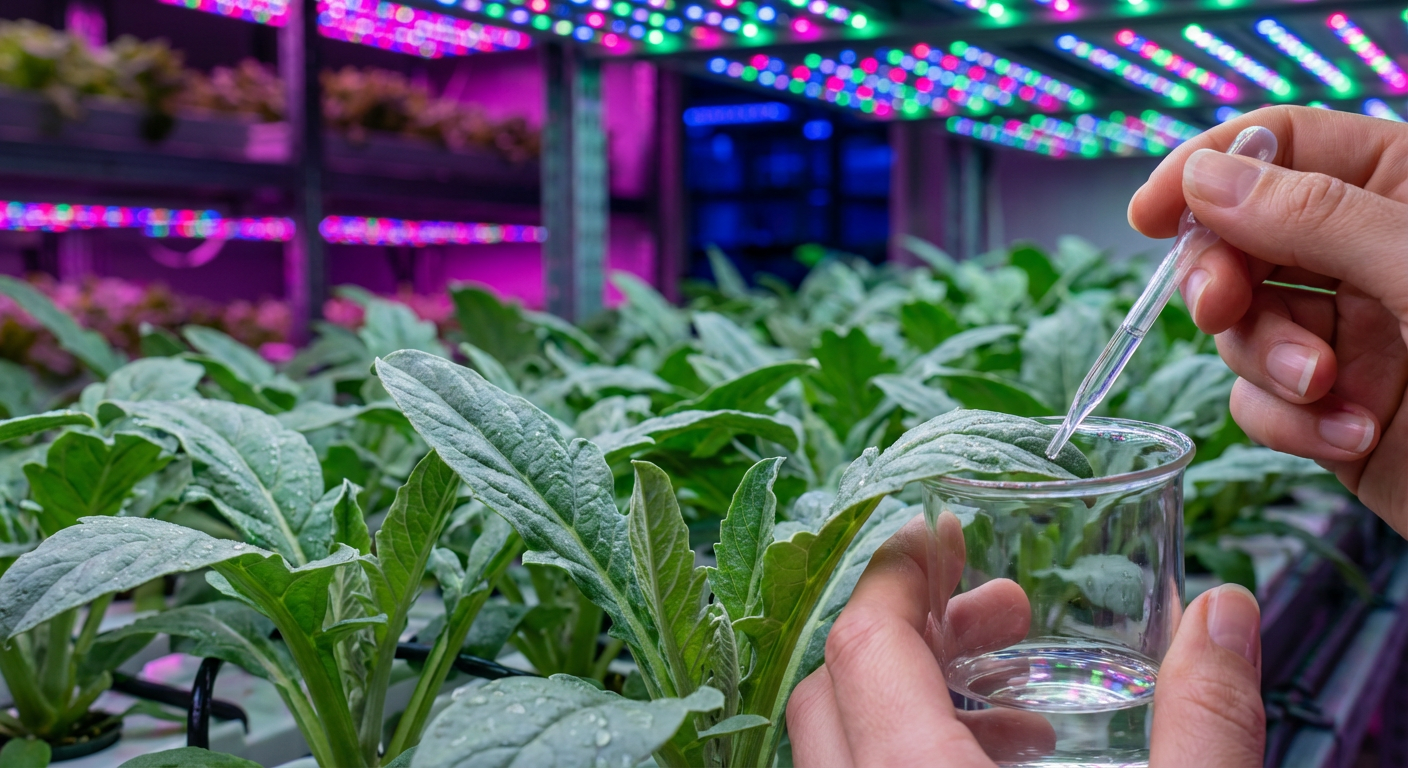
Controlled environment agriculture (CEA) provides unique advantages for sourcing high-value botanicals rich in rosmarinic acid. Our proprietary abiotic and biotic stress protocols (UV-B, drought, MeJA, salinity, elicitors) can upregulate secondary metabolite production, leading to 3–30× higher potency compared to field-grown plants. This translates directly into extracts with superior active ingredient concentrations and batch-to-batch consistency.
Advantages of Vertically Farmed Rosmarinic Acid
Enhanced Potency: Demonstrated 3–30× higher rosmarinic acid content through xenohormesis.
Batch-to-Batch Consistency: Controlled growing environments eliminate variability due to environmental factors.
Pharma-Grade Cleanliness: Zero pesticides, heavy metals, and reduced microbial load.
Full European Traceability: Complete ingredient provenance from seed to extract.
LCA Benefits: Significantly lower carbon footprint (0.72 kg CO₂-eq/kg vs. 1.9 for average vertical farms) as per LCA by Martin (2023).
Green Extraction and Intellectual Property
The integration of tailored biomass from vertical farms with advanced green extraction techniques offers considerable opportunities for intellectual property and product differentiation. Recent patents describe low-temperature methods for extracting caffeic acid and rosmarinic acid from rosemary, which maximize yield and minimize degradation. These approaches are aligned with our commitment to purity and efficiency. We can support B2B partners in developing patentable extraction or formulation strategies that leverage our unique plant material. This includes processes tailored to optimize specific rosmarinic acid fractions or to create novel blends with other botanical components for targeted applications, ensuring exclusivity and competitive advantage.
Frequently Asked Questions
What RA assay specifications (HPLC, %RA) and batch COAs can you provide?
Supernormal Greens provides detailed Certificates of Analysis (COAs) for each batch, indicating rosmarinic acid content quantified by High-Performance Liquid Chromatography (HPLC). We specify concentrations as a percentage of dry weight, ensuring consistency with target specifications established through our controlled cultivation and extraction processes.
How does your extract perform in DPPH/ORAC vs. carnosic acid/tocopherols?
Our rosmarinic acid-rich extracts demonstrate high DPPH and ORAC values, indicating strong free radical scavenging capacity. While RA excels in aqueous-phase antioxidant activity, our full-spectrum extracts typically contain co-extracted lipophilic antioxidants like carnosic acid and tocopherols to provide balanced protection across both aqueous and lipid matrices. Specific comparative data can be provided upon request.
What stability data do you have for RA in emulsions and edible oils over shelf life?
We conduct comprehensive stability studies for our rosmarinic acid extracts in various matrices, including emulsions and edible oils, under accelerated and real-time storage conditions. These studies track RA content degradation, oxidative markers, and sensory parameters to ensure optimal shelf life and performance.
Which chelators or co-antioxidants do you recommend to minimize pro‑oxidant risks?
To mitigate potential pro-oxidant risks associated with rosmarinic acid in metal-rich environments, we recommend pairing it with effective chelating agents such as phytic acid or specific peptide-based chelators. Synergistic co-antioxidants like tocopherols, ascorbic acid, or specific flavonoid glycosides also enhance overall antioxidant system stability.
Can you supply allergen/solvent-residue and heavy‑metal certificates aligned to EU/US limits?
Yes, Supernormal Greens provides full documentation including allergen statements, solvent residue testing (compliant with ICH Q3C guidelines), and heavy metal analysis (adhering to stringent EU and US pharmacopoeial and cosmetic regulations) for all our extracts, ensuring safety and compliance.
What is the RA bioavailability profile and how do delivery formats (liposomes, fibers) change it?
Oral bioavailability of free rosmarinic acid is generally low due to extensive phase-II metabolism. Advanced delivery formats like liposomes or solid lipid nanoparticles can significantly enhance RA solubilization and cellular uptake, potentially improving its bioavailability and targeted delivery into dermal layers for topical applications.
How does your process comply with EFSA E392 specifications if supplying rosemary extract for foods?
While our focus is on high-potency RA, our rosemary extracts intended for food applications comply with EFSA E392 specifications regarding maximum residual levels and purity criteria. However, E392 compliance is typically based on carnosic acid and carnosol content, which are also present in our extracts.
Can you support a patentable extraction or formulation strategy for exclusive B2B partnerships?
Yes, Supernormal Greens actively collaborates with B2B partners to develop proprietary and patentable extraction or formulation strategies. Our unique plant material, combined with innovative processing, allows for the creation of exclusive ingredient profiles or application-specific solutions.
What drug–ingredient interaction statements (e.g., OAT3) should appear on labels?
For oral nutraceutical products containing rosmarinic acid, it is prudent to include statements regarding potential drug–ingredient interactions. Specifically, preclinical data suggest RA can inhibit organic anion transporter 3 (OAT3), which may impact the pharmacokinetics of OAT3 substrate drugs like furosemide. Consult with regulatory affairs for precise labeling requirements.
Do you have clinical or consumer-use data in dermocosmetics or nutricosmetics?
While our primary focus is on ingredient supply, we collaborate with partners on clinical and consumer-use studies for dermocosmetic and nutricosmetic applications. We can provide preclinical efficacy data and refer to published human evidence for RA-containing botanical extracts that support various claims in these sectors.
References
A Comprehensive Study of the Radical Scavenging Activity of Rosmarinic Acid | The Journal of Organic Chemistry. https://pubs.acs.org/doi/abs/10.1021/acs.joc.3c02093?utm_source=openai
Inhibition of Endothelial Cell-Mediated Oxidation of Low-Density Lipoprotein by Rosemary and Plant Phenolics | Journal of Agricultural and Food Chemistry. https://pubs.acs.org/doi/abs/10.1021/jf9603893?utm_source=openai
A natural scavenger of peroxynitrites, rosmarinic acid, protects against impairment of memory induced by Abeta(25-35) - PubMed. https://pubmed.ncbi.nlm.nih.gov/17420060/?utm_source=openai
Extract of Perilla frutescens enriched for rosmarinic acid, a polyphenolic phytochemical, inhibits seasonal allergic rhinoconjunctivitis in humans - PubMed. https://pubmed.ncbi.nlm.nih.gov/14988517/?utm_source=openai
Prooxidant action of rosmarinic acid: transition metal-dependent generation of reactive oxygen species - PubMed. https://pubmed.ncbi.nlm.nih.gov/17267171/?utm_source=openai
Refined exposure assessment of extracts of rosemary (E 392) from its use as food additive - PMC. https://pmc.ncbi.nlm.nih.gov/articles/PMC7009710/
Rosemary Extracts Market Size & Share Outlook to 2030. https://www.mordorintelligence.com/industry-reports/rosemary-extracts-market?utm_source=openai
US12251412B2 - Method of extracting caffeic acid and rosemarinic acid from rosemary - Google Patents. https://patents.google.com/patent/US12251412B2/en