

Targeting an Inflammatory Master Switch: How Eugenol and Rosmarinic Acid Inhibit NF-κB in Skin
Quick answer
The escalating understanding of inflammaging underscores persistent, low-grade inflammation as a primary driver of skin aging. Innovators are increasingly searching for botanical actives that can specifically modulate inflammatory pathways in skin cells. This article explores the precise mechanisms through which key phytochemicals, particularly eugenol and rosmarinic acid, inhibit NF-κB, a master regulator of inflammation, and their implications for advanced skincare formulations.
Key Takeaways
NF-κB regulates inflammatory responses and accelerates skin aging processes.
Eugenol effectively inhibits NF-κB via multiple molecular pathways.
Rosmarinic acid offers complementary anti-inflammatory benefits in skin.
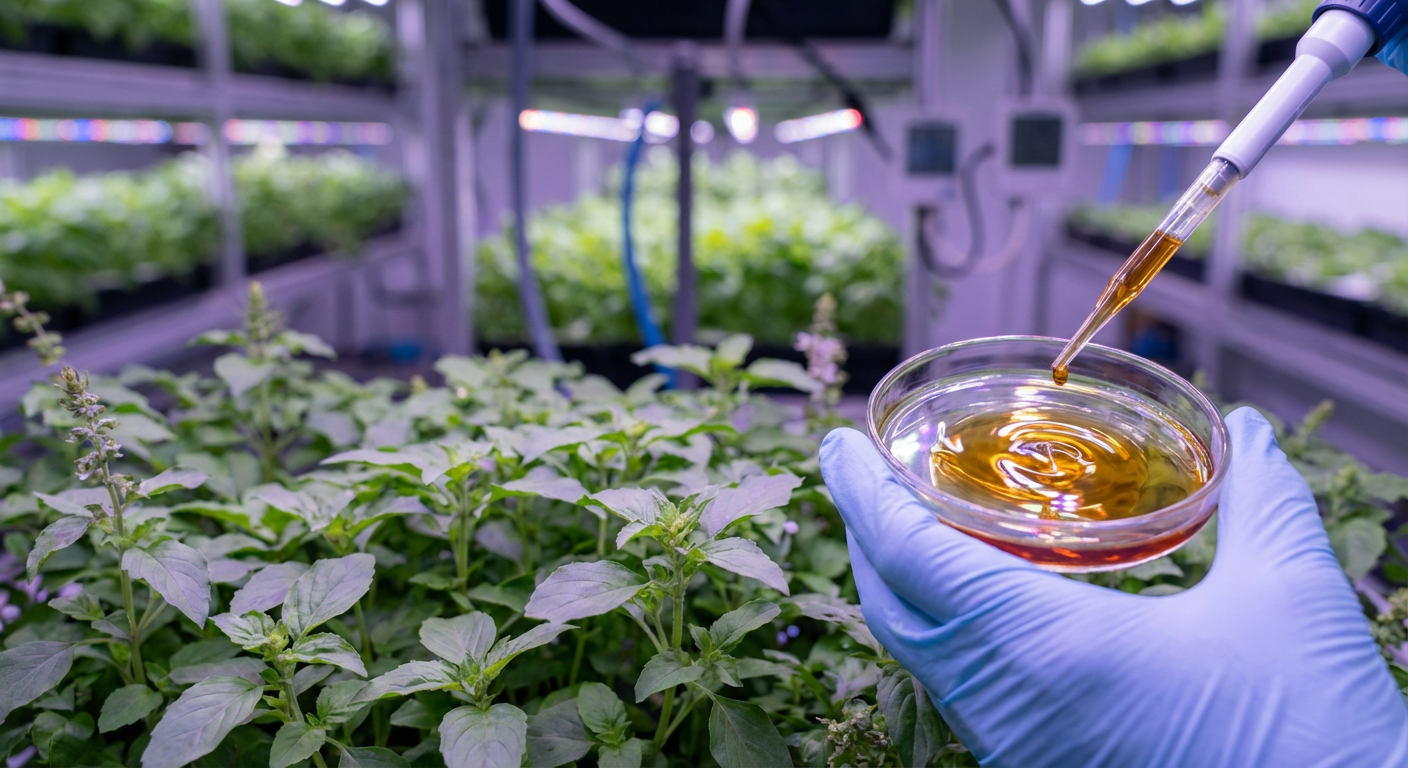
Vertical farming ensures high-potency, consistent NF-κB inhibitory compounds.
NF-κB Pathway in Skin Inflammation: Mechanisms Explained
The nuclear factor kappa-light-chain-enhancer of activated B cells (NF-κB) pathway is a critical protein complex that controls DNA transcription, cytokine production, and cell survival. In skin, chronic activation of NF-κB due to environmental stressors, UV radiation, or pollutants drives sustained inflammation, leading to accelerated aging. This activation promotes the release of pro-inflammatory cytokines, matrix metalloproteinases (MMPs), and other mediators that degrade collagen and elastin, impairing skin structure and function.
A recent systematic review in ScienceDirect underscores NF-κB as a key molecular target in skin inflammation, photo-aging, and wound healing for natural products.
Role of IKK and IκB in NF-κB Activation
The canonical NF-κB pathway involves the phosphorylation and degradation of its inhibitor, IκB. This process is primarily orchestrated by the IκB kinase (IKK) complex.
Once IκB is degraded, NF-κB (typically a p50/p65 heterodimer) translocates into the nucleus, initiating the transcription of genes associated with inflammation and tissue degradation.
IκB Degradation: Phosphorylation by IKK marks IκB for ubiquitination and proteasomal degradation.
Nuclear Translocation: Free NF-κB moves from the cytoplasm to the nucleus.
Gene Transcription: Nuclear NF-κB binds to specific DNA sequences, upregulating inflammatory gene expression.
Natural NF-κB Inhibitors: Eugenol, Resveratrol, Thymoquinone
Numerous natural compounds exhibit NF-κB inhibitory activity, offering promising avenues for targeted skincare interventions. These botanical actives often work through diverse mechanisms, providing a multi-pronged approach to managing skin inflammation. For formulators evaluating alternatives, tulsi extract offers complementary bioactives worth considering.
A systematic exploration of plant polyphenols highlights several molecular strategies for NF-κB inhibition.
Key Botanical Inhibitors and Their Mechanisms
Compound | Primary Botanical Source | Key Mechanism of NF-κB Inhibition |
|---|---|---|
Eugenol | Ocimum tenuiflorum, Clove | Inhibits IκB-α phosphorylation, reduces p65 nuclear translocation |
Rosmarinic Acid | Melissa officinalis, Ocimum tenuiflorum | Suppresses IKK activity, blocks NF-κB DNA binding |
Resveratrol | Grapes, Berries | Antioxidant effects, prevents IκB degradation, inhibits IKK |
Thymoquinone | Nigella sativa (Black Seed) | Modulates multiple inflammatory pathways including NF-κB |
Curcumin | Turmeric | Blocks NF-κB activation via diverse phosphorylation pathways |
These compounds prevent activation, nuclear translocation, or DNA binding of NF-κB, thus reducing the expression of pro-inflammatory genes. The diverse chemistry of these molecules means they can address various points in the NF-κB signaling cascade. This broad-spectrum activity is valuable in complex biological systems like skin. For instance, a 2024 review detailed how quercetin, thymoquinone, and others prevent IκB degradation or inhibit IKK kinases.
Eugenol: Multifaceted NF-κB Modulation in Skin Cells
Eugenol, a phenylpropene present in significant quantities in plants like Ocimum tenuiflorum (Holy Basil or Tulsi), demonstrates robust NF-κB inhibitory activity across various cellular models. Its multifaceted action makes it a compelling ingredient for skincare formulations targeting inflammation.
Eugenol’s inhibitory effects are dose-dependent, acting on several points within the NF-κB signaling cascade.
Mechanisms of Eugenol’s NF-κB Inhibition
Eugenol actively modulates NF-κB through several molecular pathways:
IκB-α Phosphorylation Inhibition: Eugenol attenuates the phosphorylation of IκB-α, preventing its subsequent degradation. This stabilizes IκB-α, keeping NF-κB sequestered in the cytoplasm.
p65 Nuclear Translocation Blockade: By interfering with IκB-α degradation, eugenol reduces the translocation of the active p65 subunit of NF-κB into the nucleus. This prevents NF-κB from binding to DNA and initiating gene transcription.
Cytokine Suppression: Eugenol has been shown to suppress pro-inflammatory cytokines such as TNF-α, IL-1β, and IL-6 in LPS-stimulated RAW 264.7 macrophages. This effect is associated with inhibition of NF-κB signaling, leading to a dose-dependent reduction in inflammatory mediator production.
Furthermore, eugenol impacts upstream signaling molecules. In RAW 264.7 macrophages, eugenolol and glyceryl-isoeugenol suppressed iNOS expression and pro-inflammatory cytokine release by attenuating NF-κB DNA binding, IκB-α phosphorylation, and p65 nuclear translocation, alongside MAPK and AKT pathway inhibition. In fibroblast-like synoviocytes, eugenol effectively reversed TNF-α-induced NF-κB activation and COX-2 expression. Combined with coumarin, eugenol also reduced NF-κB, NLRP3 inflammasome, IL-1β, nitric oxide, and ROS in LPS-stimulated RAW 264.7 cells, as detailed in the Asian Pacific Journal of Tropical Biomedicine.
Balancing NF-κB Inhibition: Safety and Barrier Integrity
Effective NF-κB inhibition in skincare requires a careful balance to harness its anti-inflammatory benefits without impairing essential physiological processes. Complete or excessive inhibition can disrupt normal cellular functions, given NF-κB's role in cell growth and immunity. The goal is to modulate, rather than obliterate, its activity.
Considerations for Formulators
Formulators must consider several factors when incorporating NF-κB inhibitors:
Dosage and Concentration: Optimal ranges prevent over-inhibition, identified through efficacy and safety testing. Vertical farming allows for precise control over phytochemical content, ensuring consistent dosages.
Compound Purity: Pharma-grade microbial cleanliness and zero pesticides are crucial for minimizing contaminants that could introduce unwanted reactions. This is a core benefit of Supernormal Greens' proprietary climate-controlled environments.
Formulation Stability: Delivering sensitive bioactives like rosmarinic acid and eugenol effectively requires stable formulations to maintain their inhibitory activity.
Barrier Function Support: Ingredients should not compromise the skin's natural barrier. Instead, they should support its integrity. For products focused on barrier repair, formulators might investigate ingredients for skin barrier repair, such as ursolic acid.
Moderate NF-κB modulation helps reduce chronic inflammation and oxidative stress, thereby preserving collagen and elastin synthesis and supporting overall skin health. This approach aligns with preventing inflammaging, where a slight, sustained reduction in inflammatory signaling yields significant long-term benefits.
In Vivo Evidence from Atopic and Psoriatic Skin Models
While in vitro data provides mechanistic insights, in vivo studies offer crucial evidence of NF-κB inhibitor efficacy in complex biological systems. Research on atopic dermatitis (AD) and psoriasis models demonstrates the translational potential of these compounds for dermatological applications.
A recent health-application review on eczema surveyed phytochemical-based topicals, highlighting the shift towards botanical alternatives to corticosteroids.
Evidence Pertaining to Skin Conditions
Atopic Dermatitis (AD): AD involves dysregulated immune responses and chronic skin inflammation, often characterized by elevated NF-κB activity. Natural inhibitors can help calm the inflammatory cascade.
Psoriasis: This condition features hyperproliferation of keratinocytes and robust inflammatory infiltrates, with NF-κB playing a significant role in driving the pathological process. Modulation of NF-κB has shown promise in reducing inflammatory markers.
Photo-Aging Models: In UV-B or cytokine-stimulated keratinocytes and fibroblasts, activated NF-κB increases MMP-1 and bFGF production, contributing to photo-aging. NF-κB inhibitors like parthenolide and magnolol blocked these effects, reducing UVB-induced proliferation of keratinocytes and melanocytes in mouse skin. This evidence, from a study published in 2008, highlights their potential in sun-protection formulations.
For instance, aloe extracts have been shown to inhibit NF-κB signaling in macrophage models, attenuating inflammatory responses via modulation of NF-κB, ERK, and JNK pathways. This further supports the role of botanicals in managing inflammatory skin conditions. Understanding what is inflammaging is key to appreciating the long-term benefits of sustained NF-κB modulation.
Regulatory and Safety Considerations for Natural NF-κB Modulators
The integration of natural NF-κB modulators into cosmetic and nutraceutical products necessitates adherence to stringent regulatory frameworks. Ensuring ingredient safety and substantiating claims are paramount for market acceptance and consumer trust.
Compliance and Documentation Requirements
Buyers and formulators must ensure robust documentation for:
European Union Cosmetics Regulation (EC) No 1223/2009: Requires comprehensive safety assessments and product information files (PIF) for all cosmetic products.
REACH (Registration, Evaluation, Authorisation and Restriction of Chemicals): Ensures comprehensive data on chemical properties and potential risks.
Traceability: Full European traceability from seed to extract is increasingly non-negotiable, particularly with upcoming regulations such as EUDR.
GRAS Status (Generally Recognized As Safe) or Other Safety Approvals: For nutraceutical applications, demonstrating recognized safety is imperative.
Vertical farming, specifically the rigorous process at Supernormal Greens, offers full European traceability and pharma-grade microbial cleanliness. This inherently mitigates many regulatory hurdles associated with traditional agricultural sourcing, where pesticide residues and environmental contaminants are significant concerns. The absence of pesticides and consistent compound profiles simplify safety assessments and regulatory submissions.
Market Positioning: Botanical NF-κB Inhibitors for B2B Buyers
The market demand for advanced skincare and nutraceutical ingredients that address inflammaging and chronic skin conditions is growing. Botanical NF-κB inhibitors, especially those with consistent high potency, offer a distinct competitive advantage. The focus for B2B buyers is on verifiable efficacy, supply chain reliability, and sustainability.
Strategic Advantages for Product Development
Clinical Efficacy: Ingredients with documented NF-κB inhibition provide a scientific basis for anti-inflammatory and anti-aging claims.
Supply Chain Security: Domestically sourced, vertically farmed botanicals mitigate risks associated with global supply chain volatility, climate change impacts, and geopolitical instability. For example, the upcoming EUDR (European Union Deforestation Regulation) is projected to render 35–55% of tropical supply non-compliant by 2027, making EU-grown alternatives highly attractive. This includes botanicals like Melissa officinalis for its high rosmarinic acid content.
Sustainability Credentials: An LCA (Martin, 2023) showed Supernormal Greens achieves 0.72 kg CO₂-eq/kg, substantially lower than the vertical farm average of 1.9 kg and imported botanicals at 1.4 kg. This resonates with corporate sustainability goals and consumer preferences for eco-friendly products.
Batch-to-Batch Consistency: Proprietary abiotic/biotic stress protocols (UV-B, drought, MeJA, salinity, elicitors) employed by Supernormal Greens trigger secondary metabolite upregulation, resulting in 3–30× higher potency versus field-grown alternatives and unparalleled batch-to-batch consistency. Independent analysis by CTAEX lab (2025) confirms these potency levels.
This controlled cultivation environment yields predictable phytochemical profiles, enabling precise formulation and reproducible product performance. The consistency of bioactives like rosmarinic acid and eugenol is critical for product stability and regulatory compliance.
Future Research Directions: Dosage, Delivery, and Clinical Validation
While the mechanistic understanding of NF-κB inhibition by botanicals is advancing rapidly, critical areas for future research remain. These include optimizing dosage, developing advanced delivery systems, and conducting more rigorous clinical trials to validate efficacy in human subjects.
Advancements Needed for Market Integration
Optimal Dosage Benchmarking: Establishing precise, effective, and safe concentrations for various skin conditions and product types.
Targeted Delivery Systems: Research into encapsulation, nanoparticles, and other technologies to enhance bioavailability and skin penetration of delicate compounds like eugenol and rosmarinic acid.
Comprehensive Human Clinical Trials: Expanding beyond in vitro and animal models to demonstrate tangible anti-inflammatory and anti-aging benefits in diverse human populations.
Synergistic Formulations: Investigating the combined effects of multiple NF-κB inhibitors or other complementary actives to maximize therapeutic outcomes.
This proactive research ensures that product development can move from mechanistic insight to proven clinical impact, strengthening market claims and consumer trust. The emphasis on data-driven innovation remains key for B2B buyers seeking reliable and high-performing ingredients. Suppliers like Supernormal Greens are investing in these areas, leveraging controlled plant growth to explore precise compositional effects.
Frequently Asked Questions
What is inflammaging in the skin?
Inflammaging refers to the chronic, low-grade inflammation that persists with age and drives the aging process, including in the skin. It contributes to collagen degradation, impaired barrier function, and reduced regenerative capacity, leading to visible signs of aging.
How does NF-κB contribute to skin aging?
NF-κB functions as a master switch for inflammatory and catabolic genes. Its chronic activation in the skin promotes the release of pro-inflammatory cytokines and matrix metalloproteinases (MMPs), which break down essential skin components like collagen and elastin, accelerating aging.
Which natural compounds inhibit NF-κB?
Numerous natural compounds act as NF-κB inhibitors. These include eugenol (found in Ocimum tenuiflorum), rosmarinic acid (from Melissa officinalis), resveratrol (grapes), thymoquinone (black seed), curcumin (turmeric), and flavonoids like naringenin.
How does eugenol specifically inhibit NF-κB?
Eugenol inhibits NF-κB primarily by preventing the phosphorylation and degradation of IκB-α, its inhibitory protein. This keeps NF-κB sequestered in the cytoplasm, preventing its nuclear translocation and the subsequent transcription of pro-inflammatory genes. It also suppresses pro-inflammatory cytokine production.
What are the sustainability benefits of vertically farmed NF-κB inhibitors?
Vertically farmed NF-κB inhibitors offer sustainability advantages such as significantly lower CO₂-eq emissions (0.72 kg CO₂-eq/kg vs. 1.4 kg for imported), zero pesticide use, and 100% EUDR compliance by design. This provides a secure and eco-conscious supply chain.
How does vertical farming ensure consistent NF-κB inhibitor potency?
Supernormal Greens utilizes proprietary abiotic/biotic stress protocols (e.g., UV-B light, drought analogs) to intentionally upregulate secondary metabolite production. This technique ensures 3–30 times higher potency of compounds like eugenol and rosmarinic acid, along with exceptional batch-to-batch consistency and pharma-grade purity.
Closing
The precise modulation of NF-κB using high-potency, consistently produced botanical extracts represents a significant advancement in anti-aging and anti-inflammatory skincare. Data-driven insights into compounds like eugenol and rosmarinic acid validate their role in addressing inflammaging, offering B2B buyers reliable, sustainable, and efficacious ingredients. Contact Supernormal Greens to request samples and specifications.